Centralised information
Data on extractive revenues and how they are used in social projects, collected and organised in one place.
Putting Congolese citizens at the centre of how the country's mining and oil revenues are governed, so that resource wealth answers to the people it belongs to.
The DRC's subsoil is among the richest on earth, yet too little of what it earns reaches the schools, clinics and roads it should fund. This project works to change that, by making extractive revenues visible and giving citizens a safe, structured way to watch over them.
It is led by a consortium of three reference organisations, CREFDL, CENADEP and The Carter Center, with the support of the European Union, and anchored by Mokengeli, the citizen-oversight platform CREFDL's own developers built.
Mokengeli is a citizen-control platform for the use of extractive revenues in the DRC. Designed to strengthen citizen oversight, it makes reporting corruption and the mismanagement of public resources simple and safe.
It was conceived and built by CREFDL's own developers, an initiative led and owned locally, and launched in Kinshasa. By centralising information and offering a space for exchange and participation, it lets citizens play an active role in tracking the funds the extractive sector generates, especially those meant for social projects.
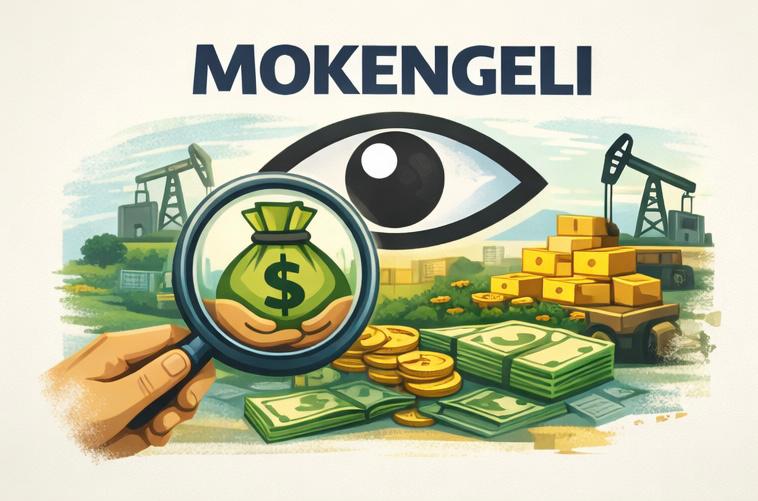
Follow a social project funded by extractive revenue, assess it, or report a problem, anonymously and securely. This is a guided demo.
Each is funded by extractive revenue. Pick one to assess it or report a problem.
Mokengeli turns scattered information and citizen vigilance into a continuous cycle of oversight.
Data on extractive revenues and how they are used in social projects, collected and organised in one place.
A fully anonymous and secure system to flag irregularities, with no risk to the citizen who raises them.
A space for dialogue between citizens, institutions and civil-society organisations.
A continuous oversight mechanism that holds public institutions to account.
Investments in education, health and community infrastructure financed by extractive revenues.
The circuit through which mining and oil revenues are managed.
How fully and openly information is published and made accessible to the public.
The project contributes to democratising governance of the extractive sector through citizen participation and control in the regulation and management of its revenues, supporting civil society to exercise that control effectively and inclusively.
Civil society, ready to act. Congolese civil-society networks are mobilised, strengthened and prepared to exercise effective, inclusive citizen control over how extractive activities are regulated and revenues managed.
Institutions that reform. Public authorities and extractive companies engage and put in place reforms and practices for transparent, accountable and inclusive governance of the sector.
Citizens with information. Congolese citizens, especially youth, women and rural populations, gain access to quality information on how the sector is governed.
Democratising governance of the DRC's extractive sector through citizen control and participation.
 CREFDL
Public-finance research and citizen oversight; builder of Mokengeli.
 CENADEP
Civil-society mobilisation and participatory development.
 The Carter Center
Consortium lead, supporting transparent and participatory governance.
Funded by the European Union, with co-financing from the consortium
Mokengeli is live, locally built and locally owned. Brought onto Nashiriki, the platform Congolese organisations already use to turn fieldwork into shared, verifiable records, it could do more, without losing what makes it CREFDL's.
Recognise and reward the citizens, monitors and organisations who report and verify, so local participation compounds instead of fading when a campaign ends.
Grow from the project's six provinces toward national coverage, province by province, on infrastructure that already exists.
Carry whistleblower reports with encryption, full anonymity and role-based access, the safeguards the platform already applies to sensitive field data.
Connect citizen oversight with the other tools communities use, so revenue data, local knowledge and verification reinforce one another.
Keep the platform and its records alive past the 2025–2027 funding window, owned and governed locally.
CREFDL keeps full control of the initiative, its data and its direction.
Talk to us about the project, about Mokengeli, or about scaling citizen oversight of resource governance in the DRC.