Le Corridor de Lobito
A multi-billion-dollar revival of a colonial-era railway, carrying copper and cobalt from the Congolese Copperbelt to the Atlantic, and a test of whether a mineral corridor can serve the communities it runs through.
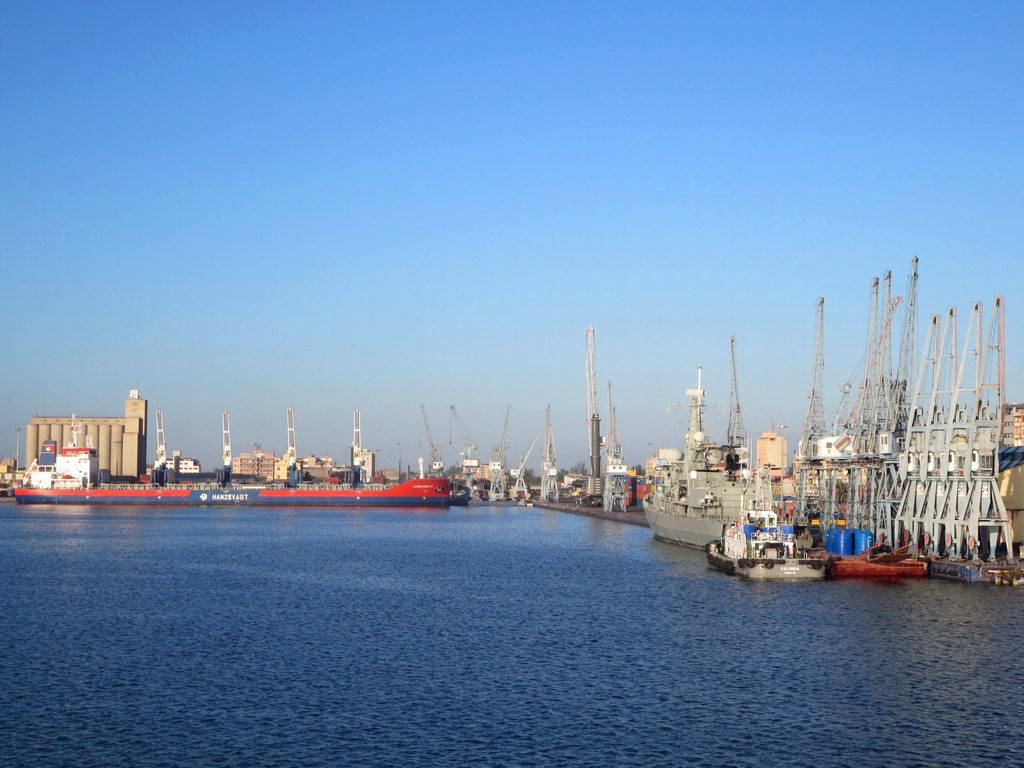
Backed by the European Union and the United States, the Lobito Corridor rehabilitates nearly 2,000 kilometres of the old Benguela Railway to move critical minerals from the Democratic Republic of Congo and Zambia to the Angolan port of Lobito, on the Atlantic coast.
It is one of the largest Western infrastructure bets in Africa in a generation. Nashiriki follows it because its promise, and its risks, land squarely on the mining communities of the DRC, where the champions we work with are based.
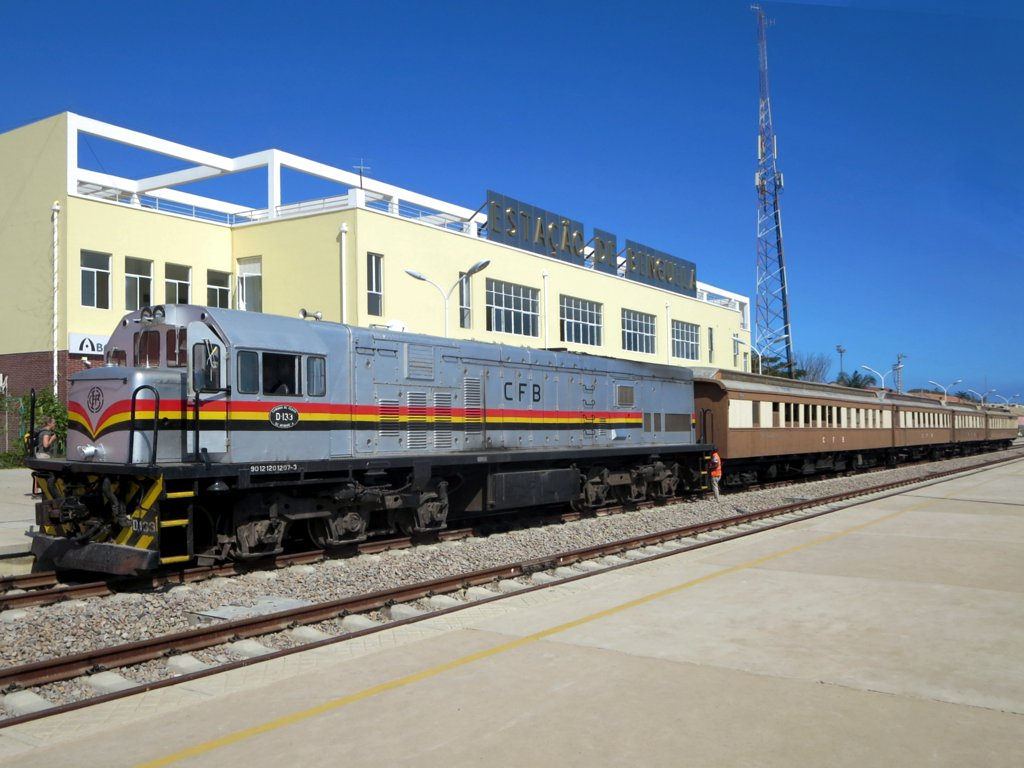
From the Benguela Railway to the Lobito Corridor
The corridor's spine is the Lobito Atlantic Railway, a 30-year concession over roughly 1,300 kilometres of brownfield Angolan track running from the port of Lobito to Luau, on the border with the DRC. A consortium of Trafigura, Mota-Engil and Vecturis holds the operating concession, and the route connects onward to the mineral-rich regions of the DRC and Zambia.
The original line, completed in the colonial era, once carried Katangese copper to the Atlantic before decades of war and disrepair shut it down. The current project rehabilitates the track, the rolling stock and the Lobito mineral port, and is paired with plans for a greenfield rail extension into Zambia.
Africa Finance Corporation acted as co-financial adviser to the Angolan concession.
Money, capacity and a contest of influence
In December 2025 the US International Development Finance Corporation signed a US$553 million loan for the railway, alongside US$200 million from the Development Bank of Southern Africa, a US$753 million package in all. The investment is expected to raise the Lobito port's capacity roughly tenfold, towards 4.6 million tonnes a year, and to cut the cost of moving critical minerals by up to 30 per cent.
Washington has been explicit that the corridor is a strategic play: securing critical-mineral supply chains and diversifying away from Chinese-controlled routes. The European Union backs it through its Global Gateway, and China's revival of the rival TAZARA railway to the Indian Ocean is widely read as the counter-move.
For Lobito, a faster and cheaper route to the Atlantic. For the great powers, a contest over who carries the minerals of the energy transition.
Benefit, and the risk of displacement
A corridor of this scale can cut transport costs, ease the movement of people and goods, and, if it is more than a mineral conveyor, improve food security along its length. Those are real possibilities for communities that have long borne the costs of mining without its rewards.
There are also immediate risks. A December 2025 investigation by Global Witness, working with Congolese and Zambian civil-society partners, estimated that rehabilitating the line near Kolwezi could put up to around 1,200 buildings, roughly 6,500 people, at risk of displacement, with low-income neighbourhoods first in line.
Much turns on an unresolved dispute over the width of the railway buffer zone: ten metres under the operator's plans, twenty under Congolese law, twenty-five according to local authorities. The investigation found that the final five metres alone would almost double the number of people facing eviction.
How La Sentinelle is involved
From its base in the copper-and-cobalt belt, La Sentinelle des Ressources Naturelles is one of the Congolese voices holding the corridor to its development promise. Its director, Jean-Pierre Okenda, takes the case to the tables where the corridor's future is decided.
The Lobito Corridor could improve food security and facilitate the movement of people and goods. But under current plans, we are far from that. The Corridor must be an integrated project, with investment in essential infrastructure like electricity and agriculture, for the real benefit of the local population.Jean-Pierre Okenda, Executive Director, La Sentinelle des Ressources Naturelles
La Sentinelle contributed to the Global Witness displacement investigation as a Congolese civil-society partner, and Okenda has carried the transparency argument to the EITI regional forum in Lusaka and to its strategic-minerals report launch: where feasibility studies and investment plans stay closed, he warns, scepticism grows and public trust erodes.
The organisation's position is not opposition but conditional support. At DRC Mining Week 2026 in Lubumbashi, on a panel alongside the Congolese environmental agency, GIZ and the EITI, La Sentinelle framed the corridor as a possible catalyst for responsible supply chains, provided its development is built around communities rather than around extraction alone.
What La Sentinelle asks of the corridor
Honour the right to information and the participation of local communities, the safeguards that current plans leave thin.
Move beyond a purely extractive model towards local value-addition, so the minerals are worked, not only shipped.
Integrate environmental and social concerns from the outset across Angola, the DRC and Zambia, a matter the team calls one of extreme urgency.
Reorient agriculture along the line towards sustainable cooperatives rather than industrial farming that erodes the environment and community rights.
Following the corridor, alongside those who live with it
Nashiriki makes the work of Congolese civil society visible and connected. La Sentinelle leads this watch on the ground: reach the team to collaborate on the corridor's governance, its communities or its supply chains.